
Water damage rarely stays where you first see it. A leaking supply line in a Columbia kitchen can wet the cabinet base, travel under flooring, soak into drywall, and reach rooms that still look perfectly dry. Stormwater, plumbing failures, appliance leaks, roof problems, sewage backups, and HVAC condensation can all create very different restoration challenges for homes and commercial properties across Columbia and Richland County.
That makes the first hours after a water loss especially valuable. Professional water damage restoration is not simply about removing standing water. The ANSI/IICRC S500 Standard for Professional Water Damage Restoration calls for inspection, moisture detection, documentation, drying goals, ongoing moisture measurements, and verification that affected materials have reached acceptable drying conditions.
Unfortunately, myths about water damage can lead property owners to wait, underestimate a problem, or stop drying before the building is actually dry. Let’s separate some of the most common myths from what restoration professionals see in the field.
Myth: “I Can Handle the Water Damage Cleanup Myself”
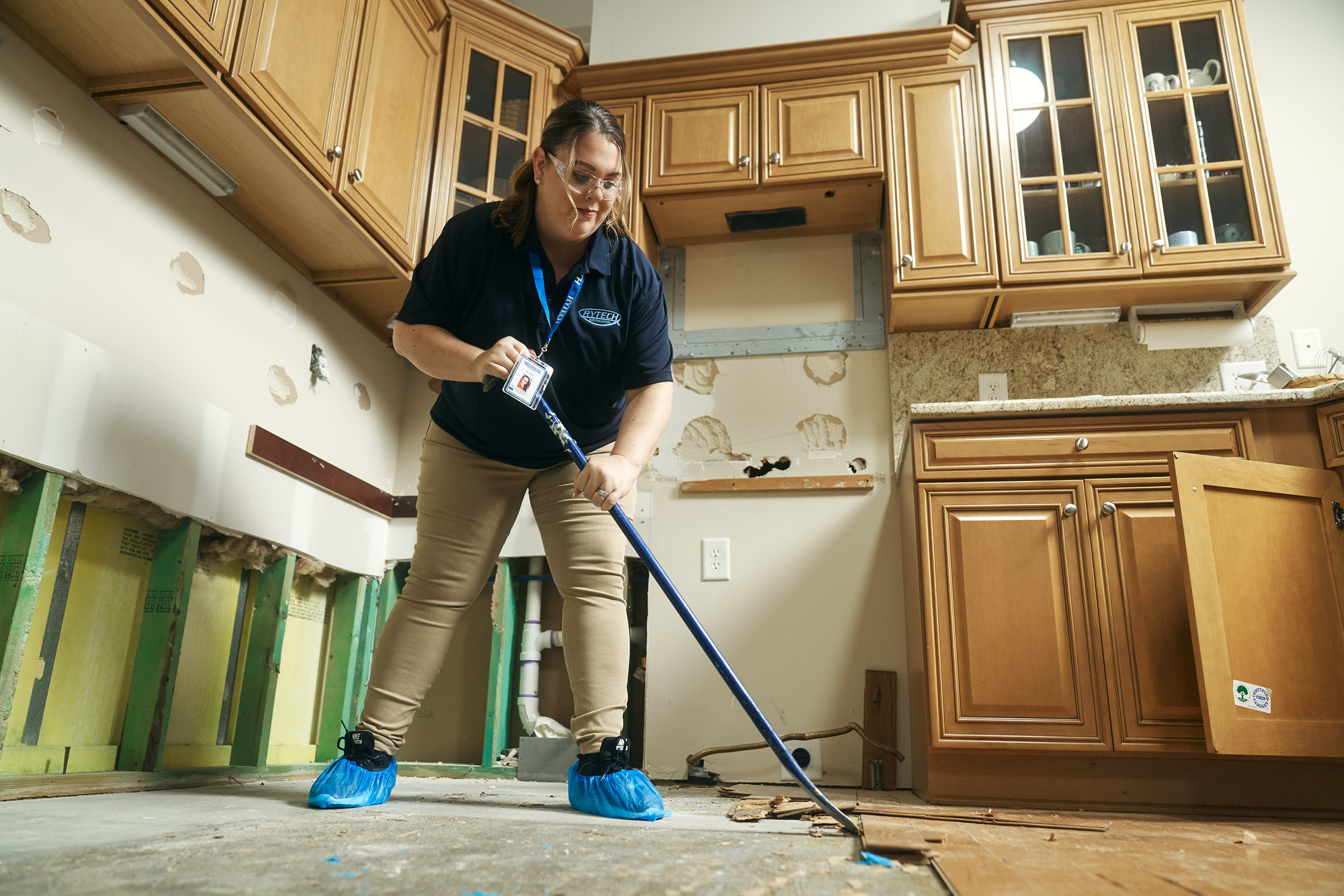
A mop, wet vacuum, and a few household fans can remove water you can see. The harder problem is finding the water you cannot see.
Water can migrate beneath finished flooring, behind baseboards, into drywall, through insulation, and inside wall or cabinet assemblies. Professional restoration technicians use moisture detection equipment to compare affected and unaffected materials and determine how far the moisture has traveled. The S500 specifically calls for professional moisture detection equipment during the initial inspection and continued moisture measurements while drying progresses.
That difference matters in Columbia homes as well as offices, retail properties, apartment communities, schools, and other commercial buildings. Removing surface water may make a room look better while wet materials remain below or behind the surface.
Rytech Restoration of the Midlands combines water extraction with moisture mapping, professional drying equipment, monitoring, documentation, and IICRC-based restoration practices. The goal is not to tear out everything that became wet. The goal is to understand what happened, dry materials that can be successfully restored, and remove affected materials that cannot be properly restored.
Myth: “Mold Only Develops After Water Has Been There for a Long Time”
Waiting for visible mold before responding to a water loss gives moisture more time to affect the building.
Mold spores already exist naturally in indoor and outdoor environments. When moisture reaches suitable materials and conditions remain favorable, microbial growth can develop. The rate varies according to temperature, humidity, the material involved, the amount of moisture, and how long materials remain wet. The S500 also recognizes that microorganisms can increase after becoming wet and that time and temperature can influence water conditions.
A useful practical target is to start drying wet materials quickly. EPA-derived guidance included in Rytech's technical reference materials identifies a 24-to-48-hour drying window for materials such as wet carpet and backing as part of microbial-growth prevention practices.
That does not mean every wet building grows mold at hour 24 or hour 48. It means waiting several days to investigate a water problem gives moisture more opportunity to create additional complications.
Myth: “Drying My Home Should Only Take a Day or Two”
There is no universal timer for structural drying.
A small plumbing leak affecting a limited area may dry much differently from water that has saturated hardwood, drywall, insulation, cabinets, concrete, or several rooms. Weather conditions, indoor humidity, the type of building assembly, the amount of water involved, and the materials affected all influence drying.
Professional restorers establish drying goals instead of guessing based on the calendar. ANSI/IICRC S500 describes a dry standard as a reasonable approximation of a material's moisture condition before the water intrusion and a drying goal as the target moisture level established for affected materials. Where applicable, the standard recommends a drying goal within 10 percent of the dry standard.
Moisture measurements are then monitored during the project. Equipment should remain in operation until the drying goals have been verified and documented.
In other words, the answer to “Is my house dry?” should come from measurements, not from how long the fans have been running.
Myth: “A Little Water Can't Cause Much of a Problem”
The amount of water on the floor does not always show the full size of the loss.
Imagine a slow refrigerator supply-line leak in a Columbia home. Only a small puddle may appear at the edge of the appliance, yet water could have been traveling beneath flooring and cabinets for days. A similar leak in an office break room or multifamily property can reach adjoining spaces before anyone notices it.
Porous and semi-porous materials can absorb and move moisture away from the original source. Drywall can wick moisture upward. Water can follow seams, penetrations, flooring systems, and other pathways through a building.
That is why Rytech Restoration of the Midlands focuses on finding the boundaries of the affected area before developing the drying plan. Finding more moisture during an inspection does not necessarily mean more materials must be removed. Accurate detection can actually support more targeted drying and help avoid unnecessary demolition.
Myth: “Household Cleaning Products Are Enough for Water Damage Cleanup”
Cleaning and structural drying solve different problems.
A household cleaner may remove soil from a washable surface, but it cannot pull moisture from the layers beneath a floor or determine whether water has reached the paper backing of drywall. Cleaning products also do not change the contamination level associated with the original water source.
For contaminated water losses, the restoration process requires additional controls. The S500 states that Category 2 or Category 3 losses call for contamination controls and appropriate worker protection before restorative drying proceeds.
Professional restoration therefore starts by understanding the water source, affected materials, extent of migration, and conditions inside the building. Products and cleaning methods are selected as part of that larger process rather than used as a substitute for inspection and moisture control.
Myth: “Everything Can Always Be Restored After Water Damage”
Rytech believes strongly in restoring materials whenever conditions support doing so. That approach can reduce unnecessary demolition, disruption, waste, and cost. Still, professional restoration does not mean saving every material in every situation.
Material type, contamination, deterioration, structural integrity, exposure time, accessibility, and the ability to clean and dry an assembly all affect salvageability. A material that became wet from a sanitary supply-line break presents a very different situation from a porous material exposed to sewage.
Experienced technicians evaluate those conditions before deciding what can stay and what needs to be removed. This is where drying science makes a meaningful difference. Instead of using demolition as the default answer, the restoration team can focus work on the materials that truly require attention.
For Columbia property owners and insurance professionals, that creates a clearer, better-documented scope of work.
Myth: “Appliances Are Safe to Use Once They Look Dry”
The outside of an appliance can look dry while moisture remains inside electrical components, insulation, motors, wiring, or connections.
Water exposure around refrigerators, washing machines, dishwashers, HVAC equipment, water heaters, and other powered equipment deserves more than a visual check. The water source also matters. An appliance exposed to contaminated floodwater presents a different situation from one sitting near a small sanitary-water loss.
A qualified professional can determine what type of additional inspection is appropriate before the equipment returns to service. Restoration technicians can also document the surrounding moisture conditions so electricians, appliance specialists, or other qualified trades have better information about the loss.
The same principle applies to commercial equipment. Looking dry and being ready for safe operation are two different questions.
Myth: “Water Is Water. It’s All the Same.”
Professional restorers do not evaluate every water loss the same way.
ANSI/IICRC S500 defines three water categories based on the range of contamination associated with the water's source and its condition after contacting materials in the building. Category 1 originates from a sanitary source, such as certain broken water supply lines. Category 2 contains significant contamination and can include sources such as some dishwasher or washing-machine discharges. Category 3 is grossly contaminated and includes sources such as sewage and rising river or stream water.
Those categories can also change as conditions change. Time, temperature, contact with contaminated materials, and microbial activity can affect the condition of the water.
For South Carolina properties, this distinction becomes especially useful after heavy rain, tropical weather, drainage problems, sewage backups, or other events where the source may not be obvious. Identifying the source helps determine the appropriate cleaning, containment, removal, drying, and worker-protection procedures.
Myth: “Regular Fans and a Dehumidifier Work Just as Well”
Air movement helps evaporation, but successful structural drying requires more than blowing air across a wet room.
Professional drying creates a managed environment. Technicians evaluate temperature, relative humidity, material moisture, evaporation conditions, and the amount and type of wet material. Commercial air movers and dehumidification equipment are then placed according to the conditions of the loss, while moisture readings show whether the drying system is producing the intended results.
Rytech technicians also use professional moisture-detection equipment to identify wet areas that household fans cannot reveal. The S500 calls for moisture measurements throughout the drying process and corrective action when drying benchmarks are not progressing as expected.
Think of the equipment as only one part of the system. Training, measurement, placement, monitoring, adjustment, and documentation turn machines into a professional drying process.
Myth: “There Are No Health Concerns Once the Water Is Gone”
Removing standing water changes the appearance of a room. It does not automatically resolve everything the water contacted.
Contaminated water can introduce microorganisms and other unwanted substances. Damp materials can also create conditions that support microbial growth. When mold remediation becomes necessary, ANSI/IICRC S520 emphasizes source removal, controls that reduce the spread of spores and fragments, HEPA vacuuming and appropriate cleaning methods rather than relying on attempts to simply “kill” mold.
That is one reason professional inspection looks beyond the center of the puddle. Technicians need to understand where water traveled, what materials became wet, and whether contamination or microbial growth changes the restoration plan.
For homes, offices, multifamily properties, healthcare settings, and other occupied buildings, those details help the restoration team develop a safer and more complete scope.
Myth: “Professional Water Damage Restoration Is Always Too Expensive”
Property owners sometimes compare the cost of professional restoration with the cost of renting a fan or wet vacuum. Those are not equivalent services.
A professional water restoration project can include emergency response, inspection, moisture mapping, water extraction, drying equipment, monitoring, documentation, cleaning, controlled removal when necessary, and communication with the parties involved in the loss. Finding hidden moisture early can also prevent a limited problem from becoming a larger project.
Insurance coverage depends on the policy, cause of loss, and circumstances, so property owners should report covered losses according to their carrier's requirements. Most people do not handle property claims every day. Rytech does, and our team can help organize photos, moisture records, project documentation, estimates, and other information that helps property owners, agents, adjusters, and carriers understand the restoration work.
Rytech has built strong relationships within the insurance industry around consistent service, documentation, and established restoration practices. That allows the local team to focus on the same goal as the property owner and insurance professional: a well-managed loss with a clear restoration path.
Myth: “Once the Area Looks Dry, There’s No Lasting Problem”
Dry surfaces can hide wet building assemblies.
Paint may feel dry while drywall remains elevated in moisture. A finished floor may look normal even though moisture has migrated into the subfloor. Cabinets can hide wet wall materials, and water can move through openings around plumbing, electrical penetrations, trim, and structural components.
ANSI/IICRC S500 calls for affected and unaffected materials to be evaluated with professional moisture-detection equipment. It also recommends establishing a dry standard from comparable unaffected materials when possible, giving technicians a meaningful reference point for the building rather than relying on appearance alone.
That measurement-based approach supports one of Rytech's core goals: dry smart and remove only what conditions require.
Myth: “If I Don’t See Damage Right Away, There Isn’t a Problem”
Some of the most useful water damage inspections begin with a sentence like, “I don't see anything, but something doesn't seem right.”
Maybe the flooring feels slightly different. Perhaps a musty odor appeared after a plumbing leak. A property manager may notice staining several rooms away from the reported source. Sometimes the only clue is that a water bill increased or an appliance had been leaking unnoticed.
Professional moisture meters help technicians investigate those clues without opening every wall in the building. Measurements can help define the affected area, compare materials with known dry areas, and guide further inspection.
For property owners in Columbia, Cayce, Lexington, Irmo, Blythewood, Elgin, Sumter, Newberry, and surrounding Midlands communities, an inspection can provide something guessing cannot: information about what is actually happening inside the property.
How Professionals Decide What Can Be Restored
Restoration versus removal is not a single yes-or-no decision applied to the whole building.
Technicians evaluate each affected material and assembly according to the source of water, contamination, moisture exposure, physical condition, porosity, accessibility, drying potential, and cost effectiveness. Contents bring additional considerations, including material composition, contamination, monetary value, and sentimental value.
This is where Rytech's restore-first mindset provides value. Materials that can be effectively cleaned and dried should not automatically become demolition debris. Materials that cannot be properly restored should be removed so the project can move forward.
That philosophy supports minimal demolition while still following the conditions of the individual loss. For homeowners, property managers, adjusters, and carriers, the result is a scope based on evidence rather than assumptions.
A Local Perspective From Rytech Restoration of the Midlands
Columbia properties come in many forms, from older homes with wood framing and crawlspaces to newer slab-on-grade construction, apartments, offices, retail spaces, institutional properties, and large commercial buildings. Each construction type gives water different places to travel and different materials to affect.
“After years of working around homes and commercial properties across the Midlands, you learn quickly that the water you see is only part of the story. Columbia-area buildings use everything from wood framing and drywall to concrete slabs, crawlspaces, engineered flooring, and layered commercial assemblies. Plumbing failures, appliance leaks, storms, roof intrusions, and HVAC-related moisture can affect each one differently. Our job is to find where the water actually went, document the conditions, and use drying science to save the materials that can be restored.”
Brian Larmon, Owner, Rytech Restoration of the Midlands
That local knowledge becomes especially valuable when South Carolina's warm, humid conditions work against the drying process. A restoration plan has to account for the building, weather, materials, water source, and actual moisture readings rather than applying the same setup to every project.
Rytech Restoration of the Midlands pairs that local experience with the systems, training, and resources of a restoration brand that has served property owners for more than 30 years.
Why Trust Professional Water Damage Restoration?
A professional restoration company brings more than equipment through the front door. The real value comes from knowing what to inspect, what to measure, what the readings mean, and how to change the drying plan when the building does not respond as expected.
Rytech Restoration of the Midlands provides 24/7 emergency response backed by certified restoration expertise, professional moisture detection, advanced drying equipment, project documentation, and communication throughout the loss. The team works with homeowners and commercial property owners while also providing the documentation that property managers, agents, adjusters, carriers, and referral partners need to follow the project's progress.
Rytech's approach is built around fast response, drying science, accurate inspections, targeted material removal, and minimizing unnecessary demolition whenever restoration remains practical. Photos and project documentation create a record of conditions and progress, while moisture measurements show when drying goals have actually been achieved.
If you are searching for water damage restoration services in Columbia, SC, the question is not simply who can remove the visible water. Look for a restoration partner that can identify the full extent of the loss, establish measurable drying goals, monitor the structure, document the work, and explain what happens next.
Get Inspected to Stay Protected in Columbia

A leaking pipe in a Richland County home, an overflowing appliance in Lexington, stormwater entering a commercial building in Columbia, or unexplained moisture in an Irmo property can all start with the same question: How far did the water go?
You do not have to answer that question by guessing.
Rytech Restoration of the Midlands is available 24/7 to help homeowners, businesses, property managers, insurance professionals, and referral partners understand the next step after a water loss. Our local team can inspect the affected area, identify moisture migration, explain the restoration process, document conditions, and develop a plan based on what the property actually needs.


